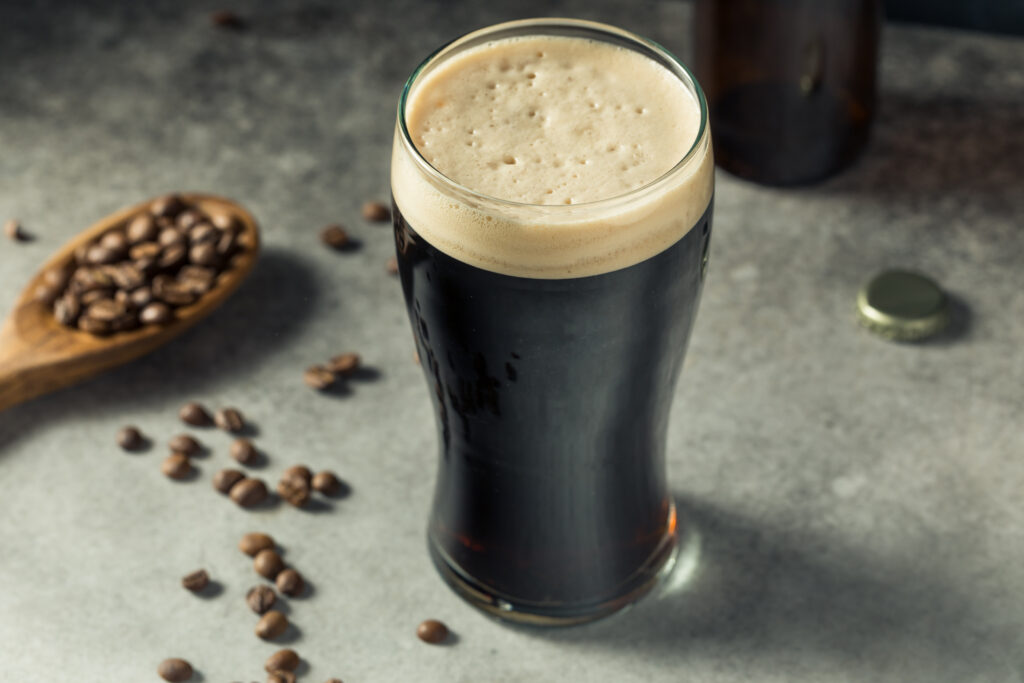
Pull a stout straight out of the fridge, pour it, and you’ll often get a beer that tastes thin, sharp, and a little too bitter. Let that same glass sit on the counter for fifteen minutes and the chocolate, coffee, and roasted malt start to come through. The beer didn’t change. The temperature did.
That’s why the best temperature to serve stout is worth a minute of your time, especially now that the weather has turned and dark beer season is starting across Bucks County. Different stouts want slightly different temperatures, and a few small habits at home make a big difference in the glass.
Here’s the range for each style, what cold and warm actually do to the flavor, and how to set up your beer fridge so you’re not guessing every time you open a bottle.
What Is the Best Temperature to Serve Stout?
Most stouts taste best between 45 and 50°F, with stronger imperial and barrel-aged stouts closer to 50–55°F. Those numbers come from beer judges, not marketing: Geoff Bragg, a Master Beer Judge with the Beer Judge Certification Program, puts stouts and porters at 45–50°F and darker, stronger ales at 50–55°F
The rule of thumb behind it is simple. The darker and stronger the beer, the warmer you serve it. A light lager is built to be crisp and refreshing straight from the cooler, while a stout is built around roasted malt, and roasted malt needs a little warmth before it shows up. Those same dark-roasted grains are also how stout gets its color, so the darkness in the glass is a good hint at the flavor you’re missing when it’s too cold. That also means the best temperature to serve stout depends on which stout you’re holding.
Serving Temperature by Stout Style
Dry Irish stouts can go the coldest, imperials the warmest, and everything else lands in the middle.
| Stout style | Well-known examples | Serve at |
| Dry Irish (often nitro) | Guinness Draught, Murphy’s Irish Stout | 38–45°F |
| Milk / sweet stout | Left Hand Milk Stout | 45–50°F |
| Oatmeal stout | Samuel Smith’s Oatmeal Stout, Founders Breakfast Stout | 45–50°F |
| American stout | Bell’s Kalamazoo Stout | 45–50°F |
| Imperial stout | North Coast Old Rasputin, Victory Storm King, Weyerbacher Old Heathen | 50–55°F |
| Barrel-aged stout | Goose Island Bourbon County Brand Stout | 50–55°F |
Dry Irish stouts like Guinness are lighter-bodied and lower in alcohol than most craft stouts, so they hold up to more chill. Guinness’s own guidance runs colder than any other style on this list, which we cover below.
Milk and oatmeal stouts are all about texture. Left Hand Milk Stout gets its sweetness and creamy body from lactose, and Samuel Smith’s Oatmeal Stout and Founders Breakfast Stout lean on oats for a silky mouthfeel. Too cold and that smoothness turns flat and watery.
Imperial and barrel-aged stouts are the ones to be patient with. Two great examples are made right here in Pennsylvania: Victory Storm King from Downingtown and Weyerbacher Old Heathen from Easton. Big beers like these and Goose Island’s Bourbon County Brand Stout open up as they warm, so pour them closer to cellar temperature and sip slowly. When it comes to imperial stout vs regular stout, the bigger malt bill and higher alcohol are exactly why imperials want that warmer pour.
Shelves rotate, especially with seasonal and barrel-aged releases, so ask our staff what’s in stock when you stop by.
What Happens When You Drink Stout Cold vs. Warm
Cold hides a stout’s flavor, too warm makes it heavy, and the sweet spot is in between.
Too Cold: The Flavor Goes Quiet
An ice-cold stout loses most of what makes it worth drinking. Aroma comes from compounds that release more readily as beer warms, so a near-freezing stout barely smells like anything. The chocolate, coffee, and dark fruit notes fade, and what’s left is the sharp edge of roasted malt. The body can feel thinner, too, which is why a fridge-cold milk stout sometimes tastes like it’s missing something.
Too Warm: Heavy and Flat
A stout that gets too warm starts to feel syrupy and flat. Carbonation fades faster, sweet styles can turn cloying, and in a high-alcohol imperial the booze starts to burn instead of warm. If your glass has been sitting next to the fire pit for an hour, that’s usually what you’re tasting.
The Sweet Spot: Let It Open Up
The easiest move is to pour a little colder than your target and let the glass warm as you drink. With a big imperial stout, you’ll notice the beer change from the first sip to the last, often getting richer and more chocolate-forward as it goes. That slow change is part of the fun with these beers.
Is Stout Better Warm?
Stout isn’t better warm, but it is better cool than ice-cold. The idea that dark beer should be drunk warm comes from a few different drinking traditions, and none of them actually means room temperature.
Britain: Cellar Temperature, Not Room Temperature
The “warm beer” reputation comes mostly from British pubs. Traditional cask ale there is served at cellar temperature, around 10–12°C, or roughly 50–54°F. That’s cool to the touch, just not fridge-cold, and it lines up closely with where imperial stouts taste their best.
Ireland: Guinness Goes Colder
Ireland’s most famous stout goes the other direction. A Guinness brand ambassador recommends serving Guinness Draught between 38 and 42°F. That’s colder than most craft stouts, and it works because a dry Irish stout is light-bodied, lower in alcohol, and served on nitrogen for that creamy head.
The U.S.: A Habit Built for Lagers
Americans tend to drink everything ice-cold because our best-selling beers are light lagers, and those really do belong at 33–40°F. Carry that habit over to an oatmeal stout or an imperial and you lose most of the flavor you paid for. So the honest answer is “cool, not cold,” with the exact number depending on the style.
Beer Fridge Temperature for Dark Beer
Around 41°F (5°C) is a good beer fridge temperature for dark beer and everything else you keep in there. The idea is to store beer a couple of degrees colder than you plan to drink it, since it warms up the moment it hits the glass.
Storage and the best temperature to serve stout are two different numbers. Keeping stouts cold slows down aging and protects flavor, so don’t crank the whole fridge warmer just for your dark beers. Store them cold, then let them warm up on your schedule.
Tips for a Mixed Fridge
If your fridge holds lagers, IPAs, and stouts together, a few habits keep everyone happy:
- Adjust at pour time, not storage time. Lagers come out and get poured right away. Stouts come out 10–20 minutes before you want them, and imperials a bit longer.
- Give dark beer the warmer spot. Door shelves usually run a few degrees warmer than the back of the fridge, which suits stouts fine.
- Keep bottles upright and out of the light. Light is what makes beer taste skunky, and an upright bottle keeps sediment at the bottom.
- In a hurry? Pour into a room-temperature glass and hold it in your hands for a few minutes. It takes the chill off faster than you’d think.
Does Glassware Change How Stout Tastes?
Yes, and the biggest mistake is a frosted mug. A frozen glass drops the beer’s temperature even further and mutes exactly the flavors you want from a stout.
A standard pint glass works well for dry Irish, milk, and oatmeal stouts. For imperial and barrel-aged stouts, a tulip or snifter is worth pulling out: the curved shape holds the aroma, and you can cup the bowl to warm the beer as you sip. With a nitro can like Guinness Draught, tilt the glass at 45 degrees, pour slowly, and let the surge settle before you drink.
Frequently Asked Questions
Can you put a stout in the freezer to chill it faster?
You can, but set a timer. A forgotten bottle can freeze, push its cap, or crack. Since a stout doesn’t need to be ice-cold anyway, a short stint in the freezer is all a room-temperature bottle needs.
How long should a stout sit out before drinking?
From a regular kitchen fridge, 10 to 15 minutes on the counter usually takes the chill off a standard stout, and an imperial can use 20 to 30. Kitchens vary, so let your taste decide. If the roast and chocolate notes still seem muted, give it a few more minutes.
Do nitro stouts need to be served colder?
Usually, yes. Nitro stouts like Guinness Draught are typically lighter-bodied dry Irish stouts, and Guinness recommends serving its Draught at 38–42°F. Heavier nitro stouts, like a nitro milk stout, still taste best a little warmer.
Will a stout go bad if it warms up and goes back in the fridge?
No, one trip out of the fridge and back won’t ruin it. Repeated temperature swings over weeks can speed up staling, though, so keep your stash somewhere steady and cool.
Find Your Next Stout at Bound Beverages
Fall and winter are the best time of year to explore stouts, from an easy-drinking dry Irish to a big imperial for a cold night by the fire. Our staff can walk you through the styles, help you pick something for a dinner or a get-together, and tell you what just came in. Seasonal and barrel-aged releases go quickly, so if you’re after something specific, give us a call before you head over.
Now that you know the best temperature to serve stout, you’ll get a lot more out of whatever you take home. Stop by the store located at 308 Easton Road, Warrington, PA 18976, and see what’s on the shelves this week.