Nothing stalls a backyard party faster than a keg that pours nothing but foam. Ten people are standing in line, the host is pumping like crazy, and every cup comes out white to the rim. The good news is that a foamy keg is almost never a bad keg. It’s usually a setup problem, and setup problems are easy to fix.
We’ve sent a lot of kegs out the door to cookouts, graduation parties, and Eagles watch parties across Warrington, Doylestown, and the rest of Central Bucks. The questions we hear afterward are almost always the same, so here’s how to tap a keg without getting a cup of foam, plus what to do if it’s already happening.
How to Tap a Keg Without Getting a Cup of Foam, Step by Step
The short version: let the keg settle, keep it ice cold, lock the coupler all the way, and pour with the faucet wide open. Each step below takes a couple of minutes, and skipping one is usually where the foam comes from.
1. Let the keg settle after the drive home
Give the keg at least an hour or two to sit still before you tap it, and longer if you can. A drive home over bumpy roads shakes the beer the same way you’d shake a can of soda. Tap it right away and that agitated CO2 comes out as foam. If the party starts at 4, pick the keg up in the morning or early afternoon so it has time to rest and chill.
2. Get it cold and keep it cold
Draft beer pours best at around 38°F. Warm beer can’t hold its carbonation, so the gas breaks out of the beer the second it hits the faucet. Put the keg in a large tub or trash can, pack ice around it up to the top, and add a little cold water so the ice makes full contact with the steel. Keep adding ice through the party, especially on a hot Bucks County afternoon.
3. Tap it the right way
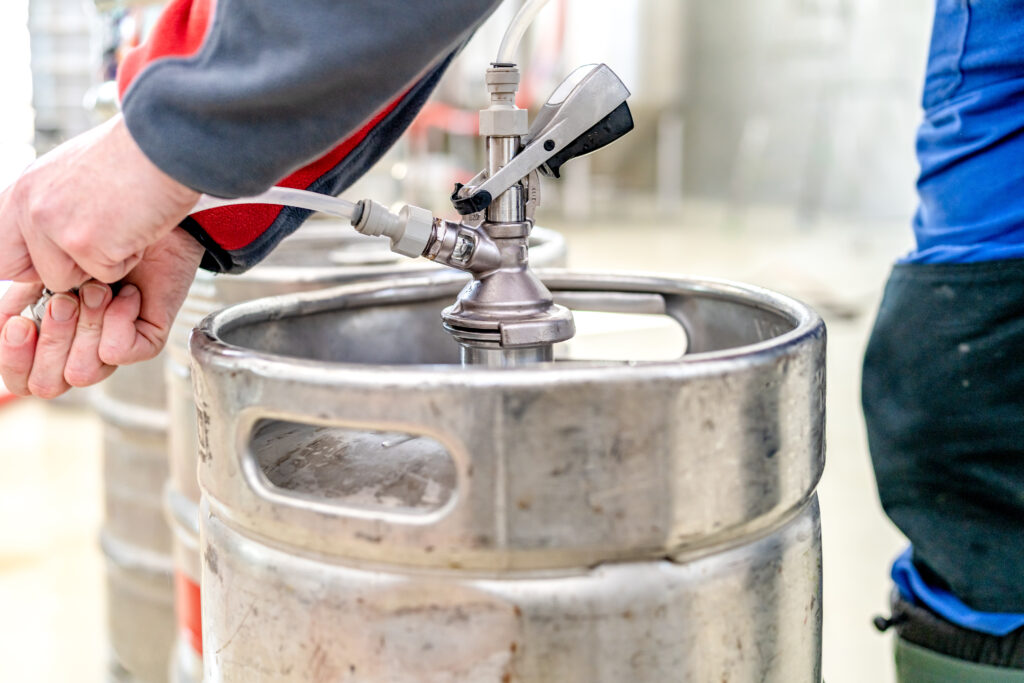
Most American kegs use a standard Sankey D coupler, which is what you’ll get with a rental tap. Make sure the handle on the coupler is pulled out and up, line the coupler up with the keg valve, and twist it clockwise until it stops. Then pull the handle out and press it down until it locks. A coupler that’s only partly engaged is one of the most common causes of foamy pours, so press firmly.
4. Don’t pump before the first pour
A freshly filled keg already has plenty of pressure inside. Pour the first few cups before you touch the pump at all. We’ll get into the pump in more detail below, because it’s where most foam problems start.
5. Pour with the faucet fully open
Hold the cup at a 45-degree angle, open the picnic tap all the way, and straighten the cup as it fills. A half-open faucet makes the beer spray and churn, which creates foam. Fully open, the beer flows smoothly down the side of the cup.
That’s really all there is to how to tap a keg without getting a cup of foam. Most problems come from one of these five steps getting rushed.
Why Is My Keg Foaming?
A keg foams because the CO2 in the beer is escaping too fast, and there are four usual reasons. If you’re asking “why is my keg foaming” halfway through the party, run through these in order.
The beer is too warm
Temperature is the cause most of the time. If the ice melted an hour ago or the keg sat in the sun before it went in the tub, the beer has warmed past the point where it can hold its carbonation. Re-ice it, cover as much of the keg as you can, and give it time. Beer in a full keg takes a while to cool back down, so it won’t fix itself in five minutes.
It was shaken and didn’t settle
A keg tapped straight out of the car, or one that got rolled and bumped on the way to the backyard, will pour foamy until it calms down. The fix is patience. Let it sit undisturbed in the ice before you try again.
Too much pressure from the pump
Over-pumping pushes extra air into the keg and drives the beer out too hard. The stream hits the cup fast and turns to foam. If the beer is shooting out of the faucet, stop pumping and pour a few cups without it.
The tap isn’t fully seated
If the coupler isn’t locked down all the way, air can mix with the beer as it leaves the keg. Check the handle. It should be pressed fully down, not hanging halfway.
A warm faucet and line can also make the first pour or two foamy after the tap has sat for a while. That’s normal, and it clears up once cold beer runs through.
How to Use a Keg Party Pump
Pump only when the beer flow slows down, and only a few strokes at a time. That one habit solves most foam problems. Knowing how to use a keg party pump properly is half of how to tap a keg without getting a cup of foam, because the pump is where most hosts go wrong.
A party pump (also called a picnic pump or hand pump) pushes outside air into the keg to keep the beer moving. Here’s how to work it:
- Pour the first few cups without pumping. The keg has enough pressure on its own at first.
- When the stream gets weak or slow, give the pump two or three smooth strokes.
- Pour again and see how it flows. Add another stroke or two only if it’s still slow.
- Don’t let guests “help” by pumping between every cup. Put one person in charge of the keg if you can.
One thing to know up front: because a party pump uses air instead of CO2, the beer starts to lose freshness once it’s tapped. Plan to finish the keg the same day or within about a day. That’s why the right size matters. For a smaller get-together, comparing a pony keg vs sixtel can keep you from paying for beer that goes stale before anyone drinks it. If you want beer to stay fresh longer, a CO2 setup or a kegerator is the better route.
What to Do When the First Pours Are All Foam
Pour the foam into a pitcher instead of handing it out, then keep pouring until the beer runs clear. The first cup or two from a new tap are often foamy while the faucet and line cool down, and that’s normal.
If it keeps coming out foamy after that, stop and work backward:
- Feel the keg. If the steel isn’t cold to the touch all the way up, add ice and wait.
- Stop pumping. Pour a few cups with no pumping at all and see if the stream calms down.
- Check the coupler. Make sure the handle is locked fully down.
- Let the foam settle in the pitcher. It turns back into beer after a few minutes, so you don’t have to dump it.
If you’re still deciding on a size, it helps to know how much a keg of beer will serve before you pick one up.
Frequently Asked Questions
How long should a keg sit before you tap it?
At least an hour or two after the drive, and longer is better. The beer needs time to settle and get fully cold. If you can, pick the keg up the morning of your party or the night before and keep it on ice.
Is it normal for the first pour to be foamy?
Yes. The first cup or two often come out foamy while the tap and line cool down. Pour them into a pitcher and keep going. If the beer is still all foam after several pours, check the temperature and stop pumping.
How many times should I pump a keg?
Only as many as you need. Start with none, then give it two or three strokes whenever the flow slows down. Constant pumping is one of the main reasons a keg turns foamy.
How long does a keg stay good once it’s tapped with a party pump?
Plan to finish it within about a day. A party pump pushes air into the keg, and the beer starts to go flat and stale after that. A CO2 system keeps it fresh much longer.
Can I fix a keg that’s already pouring foam?
Usually, yes. Re-ice it, stop pumping, make sure the coupler is locked down, and let it rest for a bit. Once the beer is cold and calm again, it should pour normally.
Pick Up Your Keg at Bound Beverages
Now you know how to tap a keg without getting a cup of foam. The other half is starting with a fresh, cold keg and the right gear. We also carry keg accessories, so you can pick up your keg and everything you need to serve it in one stop at our store on 308 Easton Road in Warrington. Our staff fields keg questions every day, so if you’ve never tapped one before, ask when you pick up and we’ll walk you through it.
Check our current keg list to see what’s available, then call ahead to reserve yours before the weekend rush.